
Salt Lake City Motorcycle Accident Lawyers
Injured in a Salt Lake City motorcycle crash? Strong Law helps riders preserve evidence, challenge unfair blame, handle insurance disputes, and pursue compensation.

A Salt Lake City motorcycle accident lawyer helps injured riders prove fault, preserve crash evidence, handle insurance disputes, and pursue compensation for medical care, lost income, pain, and long-term harm. Strong Law Accident & Injury Attorneys investigates the driver, roadway, vehicles, insurance policies, and physical evidence instead of allowing stereotypes about motorcyclists to control the claim.
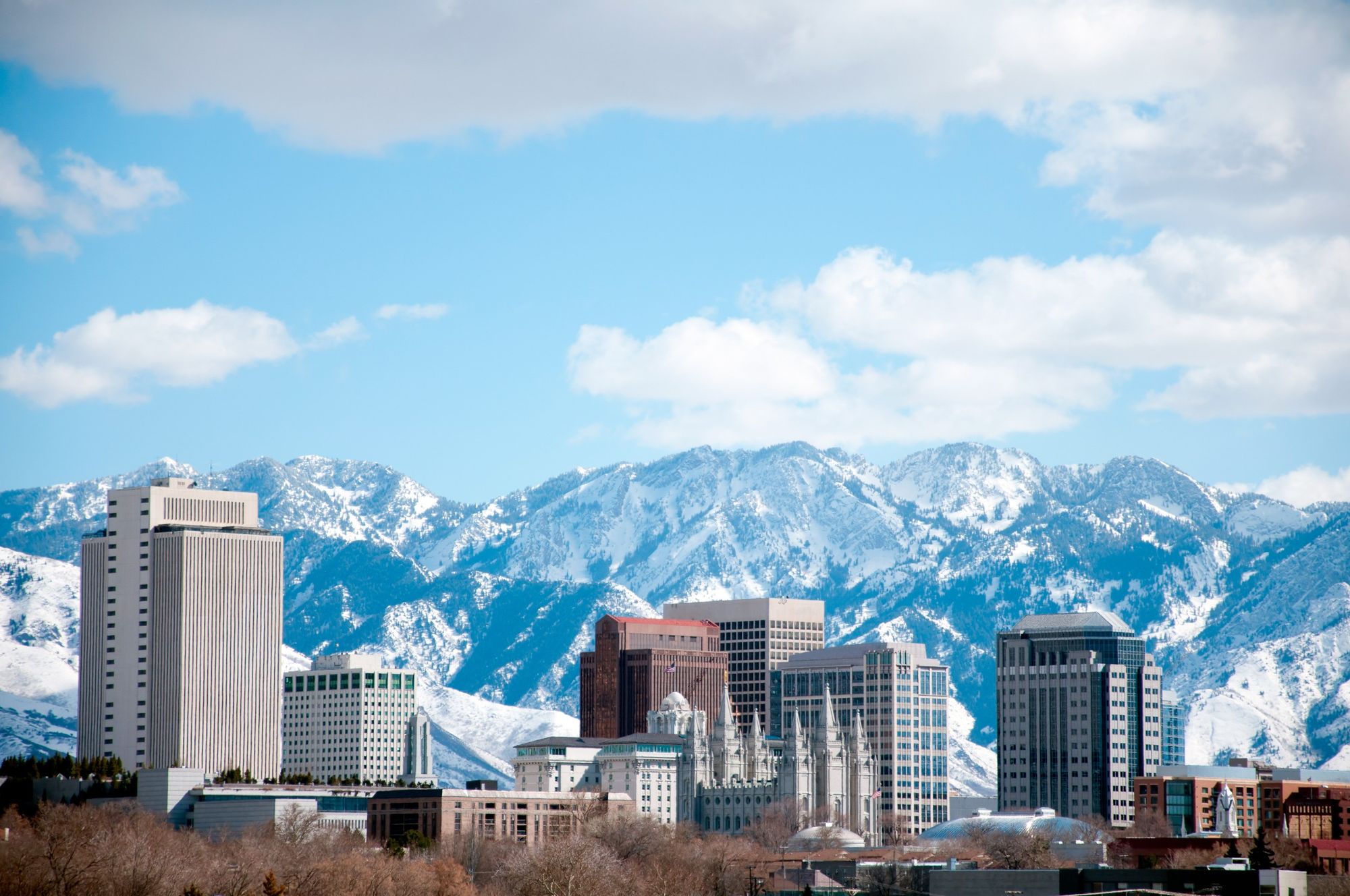
Strong Law serves Salt Lake City and Salt Lake County from its nearby Utah office in Midvale. We help riders injured downtown, in Sugar House, near the University area, and along State Street, Redwood Road, Foothill Drive, I-15, I-80, I-215, and other Salt Lake-area routes.
For broader injury questions, our Salt Lake City personal injury lawyer page explains the general claim process. Strong Law offers free case reviews, and you do not pay attorney fees unless compensation is recovered.
Do You Need a Lawyer After a Salt Lake City Motorcycle Crash?
You may need a lawyer when the crash caused emergency treatment, surgery, missed work, permanent limits, or a dispute about fault. Legal help can also matter when the driver left the scene, had too little insurance, was working at the time, or claims you were speeding, lane splitting, or riding recklessly.
Consider getting legal advice when:
- You suffered a head, spine, fracture, burn, road rash, nerve, or internal injury
- The insurer asks for a recorded statement or offers a fast settlement
- The motorcycle was totaled or has custom parts that were damaged
- Video, vehicle data, or road evidence may disappear
- A commercial truck, rideshare driver, delivery vehicle, or public agency may be involved
Motorcycle injuries can look different after the swelling, imaging, surgery, and rehabilitation process develops. Settling too early can leave future care and work limits out of the claim.
What Makes Motorcycle Accident Claims Different?
Motorcycle claims are not simply car accident claims involving a smaller vehicle. A rider has little protection from the road, another vehicle, or a fixed object. The same impact that causes minor vehicle damage can lead to fractures, brain trauma, spinal injuries, severe road rash, or permanent disability.
The evidence is also different. The motorcycle’s scrape marks, broken parts, tire condition, controls, and point of impact may help explain how the crash happened. A damaged helmet, jacket, boots, gloves, or action camera may show impact direction and force. Rider position, braking, lean angle, sight lines, and available escape paths can matter when a driver claims the rider could have avoided the collision.
The Utah Highway Safety Office reports that motorcycles made up about 3% of registered vehicles but nearly 16% of Utah road deaths from 2020 through 2024. During that period, Utah recorded 5,887 motorcycle-related crashes and 229 fatalities. Fifty-six percent of those crashes involved another motor vehicle, often when a driver failed to yield or made an improper turn. Crashes were concentrated in urban areas, including Salt Lake County.
Where and How Do Motorcycle Crashes Happen in Salt Lake City?
Many crashes happen when a driver turns left across a rider’s path, changes lanes without checking a blind spot, enters from a driveway, follows too closely, or fails to yield at an intersection. Other cases involve rear-end impacts, open vehicle doors, road debris, construction zones, unsafe pavement, impaired driving, or a commercial vehicle moving into the rider’s lane.
Salt Lake City creates several kinds of riding environments. Downtown streets involve turning traffic, parking movements, delivery vehicles, and frequent intersections. State Street, Redwood Road, 400 South, 700 East, 1300 East, and Foothill Drive can involve busy cross traffic and changing speeds.
I-15, I-80, I-215, and the I-15/I-80/State Route 201 interchange area south of downtown can create merging, lane-change, and exit conflicts.
A collision with a semi-truck or another commercial vehicle may also require the company, driver-log, maintenance, and insurance evidence discussed on our Salt Lake City truck accident page.
These are examples of traffic settings, not claims that one road automatically makes another driver responsible. Fault depends on what each person did and what the evidence shows.

Contents

How Does Motorcycle Insurance Work in Utah?
Utah motorcycle insurance does not follow the same standard PIP structure as ordinary passenger-vehicle coverage. Motorcycle policies are not required to include Personal Injury Protection, and riders should not assume that Utah’s standard no-fault benefits will pay their early medical bills. Utah law allows certain first-party medical coverage to be offered or included, but which coverage applies depends on the policies and facts of the crash.
You can review Utah’s motorcycle insurance provisions in Utah Code § 31A-22-302.
Possible sources of payment may include:
- The at-fault driver’s bodily-injury liability coverage
- Uninsured or underinsured motorist coverage available under a policy that covers the rider
- Optional motorcycle medical-payments or other first-party medical coverage
- Health insurance
- Commercial, employer, rideshare, or delivery coverage when another driver was working
- Property-damage coverage for the motorcycle, custom parts, riding gear, towing, and storage
A serious injury can exceed one driver’s liability limits. Strong Law reviews every available policy before treating one insurer’s offer as the full value of the claim. Our Salt Lake City car accident page explains general Utah auto-insurance issues, but the motorcycle coverage analysis must account for the lack of required PIP.
If the driver leaves the scene or has no insurance, report the crash promptly and preserve witness, video, vehicle-fragment, and license-plate evidence. Uninsured-motorist coverage may apply when the rider qualifies under an available policy, subject to its terms and Utah law.
What Is the Difference Between Lane Filtering and Lane Splitting?
Utah treats lane filtering and lane splitting differently. Lane filtering is a limited, low-speed maneuver around stopped traffic.
Under Utah Code § 41-6a-704, a rider may filter only when:
- The motorcycle is on a qualifying roadway or off-ramp with at least two lanes moving in the same direction
- The posted speed limit is 45 mph or less, unless the rider is on a qualifying off-ramp
- The vehicles being passed are stopped
- The motorcycle is moving no faster than 15 mph
- The rider is not on an on-ramp
- The movement can be made safely
Lane splitting generally means riding between lanes while traffic is moving. Utah prohibits lane splitting under Utah Code § 41-6a-704.1.
This distinction matters because an insurer may call any movement between vehicles “lane splitting.” Video, traffic speed, the posted limit, lane layout, and the rider’s speed can show whether the rider was filtering lawfully.
Following the filtering rules does not automatically prove the other driver caused the crash. It can, however, answer an unfair claim that the rider was acting illegally.
Can Helmet Use Affect a Utah Motorcycle Claim?
Utah requires motorcycle operators and passengers under age 21 to wear qualifying protective headgear. The law also says that failure to wear a helmet does not constitute comparative negligence and may not be introduced in civil litigation to address negligence, injuries, or a reduction of damages.
Utah Code § 41-6a-1505 contains both rules.
A rider should still preserve the helmet and other gear. Their condition may help show where the impact occurred, whether the rider slid or was thrown, and how the crash caused the injuries. The gear should not be cleaned, repaired, or discarded before it is documented.
How Is Fault Proved in a Motorcycle Accident Case?
A strong claim uses physical evidence rather than assumptions. Useful evidence may include:
- The police report, 911 records, and witness statements
- Scene photos, measurements, skid marks, scrape marks, debris, and sight lines
- Traffic, business, residential, dashcam, or helmet-camera video
- Vehicle event data, phone records, app records, and GPS information when relevant
- Motorcycle damage, mechanical inspection, helmet damage, and riding gear
- Signal timing, road-maintenance records, and construction information
- Medical records that connect the crash to the injuries
- Accident-reconstruction or engineering analysis when the facts require it
Photograph the motorcycle and gear before repairs begin. Save towing and storage records, repair estimates, title documents, accessory receipts, and photographs showing the motorcycle before the crash.

How Do Insurance Companies Try to Blame Riders?
Insurance adjusters may claim the rider was speeding, weaving, following too closely, lane splitting, filtering illegally, or riding where a driver could not see the motorcycle. They may point to motorcycle modifications, a missing endorsement, protective gear, or social-media posts even when those facts did not cause the crash.
Those arguments often rely on stereotypes instead of evidence. The real questions are where the vehicles were, what each person could see, who had the right of way, how fast traffic was moving, whether a turn or lane change was safe, and whether the rider had a reasonable escape path.
What If You Were Partly at Fault?
Utah uses comparative fault. Under Utah Code § 78B-5-818, recovery may be available when the combined fault assigned to the defendants and other responsible parties is greater than the rider’s own fault. Any recovery may then be reduced by the rider’s percentage of fault.
An insurer’s accusation does not decide the issue. Video, impact evidence, vehicle data, witnesses, road measurements, and crash reconstruction may show that another driver carried most or all of the responsibility.
What Injuries and Compensation Can a Claim Include?
Motorcycle crashes can cause traumatic brain injuries, spinal cord damage, fractures, torn ligaments, internal injuries, nerve damage, burns, scarring, amputations, and severe road rash.
Head trauma may require the diagnosis and cognitive evidence discussed on our Salt Lake City brain injury lawyer page. Permanent disability or lifetime care may overlap with a Salt Lake City catastrophic injury claim.
Compensation may include:
- Emergency care, surgery, hospitalization, and rehabilitation
- Future treatment, medication, therapy, and medical equipment
- Lost wages and reduced future earning ability
- Pain, emotional distress, scarring, and disfigurement
- Permanent impairment and loss of mobility
- Transportation and other out-of-pocket costs
The property claim may include the motorcycle, custom parts, helmet, jacket, boots, gloves, phone, luggage, towing, and storage.
If a rider dies from the crash, the family may need advice about heirs, estate issues, survival claims, and Utah’s shorter filing period. Our Salt Lake City wrongful death lawyer page explains those issues.
What Should You Do After a Salt Lake City Motorcycle Crash?
- Get medical care. Some head, spine, internal, and soft-tissue injuries are not fully clear at the scene.
- Report the crash. Ask law enforcement to document the vehicles, witnesses, roadway, and injuries.
- Photograph everything. Capture the motorcycle, other vehicles, road, debris, signals, signs, marks, injuries, helmet, and gear.
- Get witness information. Do not rely only on the police report to preserve names and phone numbers.
- Protect the motorcycle and gear. Avoid repairs, disposal, or destructive inspection before the evidence is documented.
- Save records. Keep medical papers, bills, wage records, towing invoices, storage charges, estimates, and insurer messages.
- Be careful with statements and social media. Do not guess about speed, distance, filtering, or fault.
- Get an early legal review. Video and electronic records can disappear quickly.
How Long Do You Have to File a Utah Motorcycle Accident Claim?
Many Utah negligence-based motorcycle injury lawsuits are generally subject to a four-year filing period under Utah Code § 78B-2-307.
Fatal motorcycle crashes generally involve a two-year wrongful-death filing period under Utah Code § 78B-2-304.
If a city, county, public employee, or another governmental entity may be legally responsible, a written notice of claim may be required within one year under Utah Code § 63G-7-402. Insurance-contract deadlines and other specialized rules may also apply.
Waiting is risky even when the general filing period seems longer. Video, motorcycle condition, electronic data, and witness memories are easier to preserve early.
How Does a Motorcycle Accident Claim Move Forward?
The process may include:
- Free case review. The team reviews the crash, injuries, insurance, and available evidence.
- Evidence preservation. The motorcycle, gear, video, electronic data, and records are identified and protected.
- Fault and coverage investigation. The drivers, vehicles, roadway, witnesses, and insurance policies are reviewed.
- Medical and wage documentation. Treatment, bills, missed work, and future limits are developed.
- Property-loss documentation. The motorcycle, custom parts, gear, towing, storage, and total-loss value are addressed.
- Settlement demand and negotiations. The claim is presented with supporting evidence.
- Litigation when needed. A lawsuit may be filed when the insurer disputes responsibility or case value.
A claim should not be rushed before the injury and future treatment are reasonably understood. It also should not sit while important crash evidence disappears.
We’ve helped thousands of accident victims like you
we win
98%
4.9
stars
over
2,000


“Very professional, and treated me as an equal.”
"Just wanted to say thank you to Jed and his team at Strong Law. Not only was I happy with the outcome, but the entire process as a whole. I would definitely recommend this firm to anyone. Thanks again."
“Unbelievable work!”
"I had a claim involving my own insurance company. I tried to negotiate with them, and they completely denied my claim – two times. I then hired Strong Law, and the change was instant. The insurance company immediately began negotiating, and Jed was able to secure an unbelievably good settlement. I will never again attempt to take-on an insurance company without Strong Law in my corner. Thank you!"
“I got justice and awesome compensation.”
"I hired Strong Law after my car accident. Jed and his team worked hard on my case. They were professional and compassionate through my surgery and as I recovered, and they were awesome on communication. I got justice and awesome compensation. I would recommend Strong Law to anyone in my situation."

Why Choose Strong Law for a Salt Lake City Motorcycle Claim?
A Salt Lake City motorcycle accident attorney should understand rider-specific evidence, Utah’s filtering and helmet rules, the lack of required motorcycle PIP, serious injury documentation, property damage, and the bias riders often face. The lawyer should also explain fees clearly and have a plan for preserving the motorcycle, gear, video, and insurance evidence.
Before representing injured people, attorney Jed Strong worked as an in-house attorney for GEICO. That experience helps Strong Law recognize blame-shifting, incomplete coverage reviews, broad medical requests, and settlement tactics used to reduce motorcycle claims.
Strong Law builds each claim around the crash rather than a standard car-accident checklist. Our Utah office is in Midvale and serves riders throughout Salt Lake City and Salt Lake County. Strong Law has handled more than 2,000 successful cases across its offices, and our Midvale office has a 4.8-star Google rating from 162 reviews.
Strong Law offers free case reviews and handles motorcycle injury claims on a contingency fee basis. There are no upfront attorney fees or hourly bills. The exact fee is explained before you hire the firm, and attorney fees are not owed unless compensation is recovered.
When Should You Call a Salt Lake City Motorcycle Accident Lawyer?
Call as soon as possible when the crash caused medical treatment, the driver disputes fault, the insurer is asking questions, or the motorcycle and gear may be repaired or discarded.
Early help is especially important when the driver left the scene, a commercial vehicle was involved, the rider may need surgery, or the injuries could affect work and independence for years.
Frequently Asked Questions About Salt Lake City Motorcycle Claims
Does Utah PIP cover injured motorcycle riders?
Motorcycle policies are not required to include PIP, and riders should not assume that Utah’s standard no-fault benefits apply. Depending on the policies and crash, optional first-party medical coverage, the at-fault driver’s liability insurance, UM/UIM coverage, and health insurance may be relevant.
Can I recover if the insurer says I was speeding?
Possibly. An accusation is not proof. Video, impact evidence, vehicle data, witnesses, road measurements, and reconstruction analysis may help determine speed and fault.
Can I bring a claim if I was lane filtering?
Yes, if another party caused the crash. Whether the filtering was lawful depends on the road, speed limit, traffic movement, motorcycle speed, and safety of the maneuver. Any claim should be evaluated from the actual evidence.
Can the insurer use my lack of a helmet against me?
Utah law generally does not allow an insurer to use a rider’s failure to wear a helmet to prove fault or reduce damages. Riders under age 21 are still required to wear qualifying headgear.
What if the driver left the scene?
Report the crash promptly and preserve witness, video, debris, and license-plate evidence. If the driver is not found, uninsured-motorist coverage may be available under a policy that covers the rider.
What if I was partly at fault?
Utah comparative-fault rules may reduce compensation. Recovery may be available when the combined fault of the defendants and other responsible parties is greater than the rider’s fault.
What is my motorcycle accident case worth?
Value depends on the injuries, future care, lost income, permanent limits, fault evidence, insurance coverage, and property loss. A serious claim should not be valued before the long-term medical picture is clear.
How long do I have to file a motorcycle accident claim in Utah?
Many Utah negligence-based motorcycle injury lawsuits generally have a four-year filing period. Fatal crashes, government claims, insurance disputes, and other specialized claims may involve shorter or different deadlines. Speak with a lawyer early so the correct requirements can be identified.
How much does a motorcycle accident lawyer cost?
Strong Law handles motorcycle injury claims on a contingency fee basis. There are no upfront attorney fees or hourly bills, and attorney fees are not owed unless compensation is recovered.
Where is Strong Law’s Utah office?
Strong Law’s Utah office is in Midvale. From that office, we serve riders throughout Salt Lake City, Salt Lake County, and nearby communities.
Speak With a Salt Lake City Motorcycle Accident Lawyer Today
A motorcycle crash can leave you facing serious injuries, lost income, a damaged bike, and an insurer trying to place the blame on you. Strong Law can preserve evidence, investigate fault and coverage, document your losses, and help protect the claim.
Contact Strong Law Accident & Injury Attorneys or call 206-741-1053 for a free case review. You do not pay attorney fees unless we recover compensation for you.
Get Your Free
Case Review

Contact us
Our team is standing by to help you.