


Everett Slip and Fall Lawyer for Injury Claims
We Fight for Injury Victims of Slip and Fall Accidents

An Everett slip and fall lawyer helps injured people pursue compensation when unsafe property conditions cause falls in local stores, parking lots, sidewalks, apartment buildings, restaurants, hotels, workplaces, or commercial properties in Everett and Snohomish County. Strong Law Accident & Injury Attorneys represents people injured after serious falls near Everett Mall Way, Broadway, Evergreen Way, downtown Everett, and other busy local areas where wet entryways, uneven pavement, unsafe stairs, poor lighting, and neglected property conditions can lead to serious injuries.
If you were hurt in a fall in Everett, call (425) 740-0344 or request a free case review today. There is no fee to speak with our team, and you do not pay attorney fees unless we recover compensation for you.
People searching for an Everett slip and fall attorney, a slip and fall lawyer in Everett WA, or a premises liability lawyer in Everett are often dealing with more than a simple accident. These cases can involve store incident reports, surveillance video, witness statements, cleaning records, maintenance logs, poor lighting, weather hazards, and insurance companies that try to blame the injured person.
Strong Law also serves as Everett personal injury lawyers for people hurt in serious local accidents, including falls that cause head injuries, back injuries, broken bones, long-term mobility problems, or other life-changing harm.
Slip and Fall Help for Injured People in Everett
A fall can seem minor at first, but the injuries can be serious. Many people suffer broken bones, concussions, back injuries, neck injuries, torn ligaments, shoulder injuries, knee injuries, hip injuries, or long-term pain after a fall.
Everett slip and fall claims can also be harder to prove than they seem, especially when the fall happened at a store, apartment complex, restaurant, parking lot, office building, or commercial property in Snohomish County. The property owner or insurance company may argue that the hazard was obvious, that you should have avoided it, that no one knew about it, or that your injuries were caused by something else.
Strong Law helps injured people protect the claim, preserve evidence, and deal with insurance companies while they focus on medical care and recovery.
Falls in Everett may happen at grocery stores, retail shops, restaurants, apartment complexes, hotels, office buildings, medical offices, parking lots, sidewalks, stairways, and public walkways. They may also happen near Everett Mall Way, Broadway, Evergreen Way, downtown Everett, and commercial properties throughout Snohomish County.
Why Everett Slip and Fall Claims Need Local Evidence
Everett slip and fall claims often depend on fast evidence preservation. Many falls happen at businesses, apartment complexes, parking lots, restaurants, and retail properties where the dangerous condition may be cleaned, repaired, or changed soon after the incident.
That can be a major issue after a fall on a wet entryway, broken sidewalk, loose mat, uneven parking lot, poorly lit stairway, or slick floor near a store entrance. The condition may look different minutes or hours later.
Falls in Everett may also involve weather-related hazards. Rain, wet shoes, tracked-in water, poor drainage, and slippery entryways can create dangerous conditions at businesses and apartment complexes. Not every weather-related fall creates a claim, but property owners may still need to take reasonable steps when they know customers, tenants, or visitors are likely to encounter a dangerous condition.
Strong Law can help preserve evidence before it disappears, including surveillance footage, incident reports, cleaning logs, maintenance records, witness information, and photos of the hazard.
What Does an Everett Slip and Fall Lawyer Do?
An Everett slip and fall lawyer investigates the fall, identifies who may be responsible, gathers evidence, handles insurance communication, documents injuries and damages, and seeks compensation through an insurance settlement or lawsuit.
That work may include reviewing incident reports, photos, surveillance footage, witness statements, medical records, cleaning logs, maintenance records, inspection records, prior complaints, employee statements, insurance communications, and lost wage documentation.
The goal is to build the claim around evidence, not the version of events offered by the property owner or insurance company.

Contents

When Is a Property Owner Responsible for a Fall?
Slip and fall cases are usually based on premises liability. Premises liability means a property owner, business, landlord, tenant, or property manager may be responsible when unsafe property conditions cause an injury.
A property owner is not automatically responsible just because someone fell. The injured person usually needs to show that the property owner failed to act reasonably. That may mean the owner or business created the hazard, knew about it and failed to fix it, or should have discovered it through reasonable inspection.
For example, a grocery store may be responsible if employees failed to clean a spill in a reasonable time. A restaurant may be responsible if it left a wet floor without warning signs. An apartment complex may be responsible if it ignored broken stairs, poor lighting, or unsafe common areas. A parking lot owner may be responsible if dangerous potholes, uneven pavement, or poor maintenance caused the fall.
Strong Law investigates what the property owner knew, what they should have known, how long the hazard existed, and whether reasonable steps were taken to keep visitors safe.
Who May Be Responsible for an Everett Slip and Fall?
The person or business responsible for a fall is not always obvious. In Everett, a fall may happen inside a store, outside a business, in a shared parking lot, on a sidewalk, at an apartment complex, or in a common area controlled by more than one party.
Depending on where the fall happened, responsible parties may include a store owner, restaurant, landlord, property management company, tenant, maintenance contractor, cleaning company, snow or ice removal contractor, business operating on leased property, or government entity responsible for public property.
This matters because different parties may control different parts of the property. A business may control the inside of a store, while a landlord, property manager, maintenance company, contractor, or government entity may control the sidewalk, parking lot, stairway, entryway, or common area.
Strong Law investigates who controlled the area, who was responsible for maintenance, whether complaints were made before the fall, and whether the hazard should have been fixed or warned about sooner.
How Do You Prove a Property Owner Knew About the Hazard?
Many slip and fall claims turn on notice. Notice means the property owner knew or should have known about the dangerous condition before the fall.
Actual notice means the property owner or employees knew about the hazard. For example, a customer may have reported a spill, an employee may have seen a broken step, or prior complaints may have been made about poor lighting.
Constructive notice means the hazard existed long enough that a reasonable property owner should have discovered and fixed it. For example, a spill may have been on the floor long enough that employees should have found it during routine checks.
Evidence that may help prove notice includes surveillance footage, cleaning schedules, inspection logs, prior complaints, employee statements, maintenance records, witness statements, incident reports, and photos showing dirt, footprints, cart tracks, or other signs that the hazard had been present for a while.
This is why fast action matters. Video may be deleted, spills may be cleaned, warning signs may be moved, and maintenance records may become harder to obtain.
Common Slip and Fall Hazards in Everett
Slip and fall accidents can happen in many ways. The type of hazard affects what evidence matters and who may be responsible.
Wet Floors and Spills
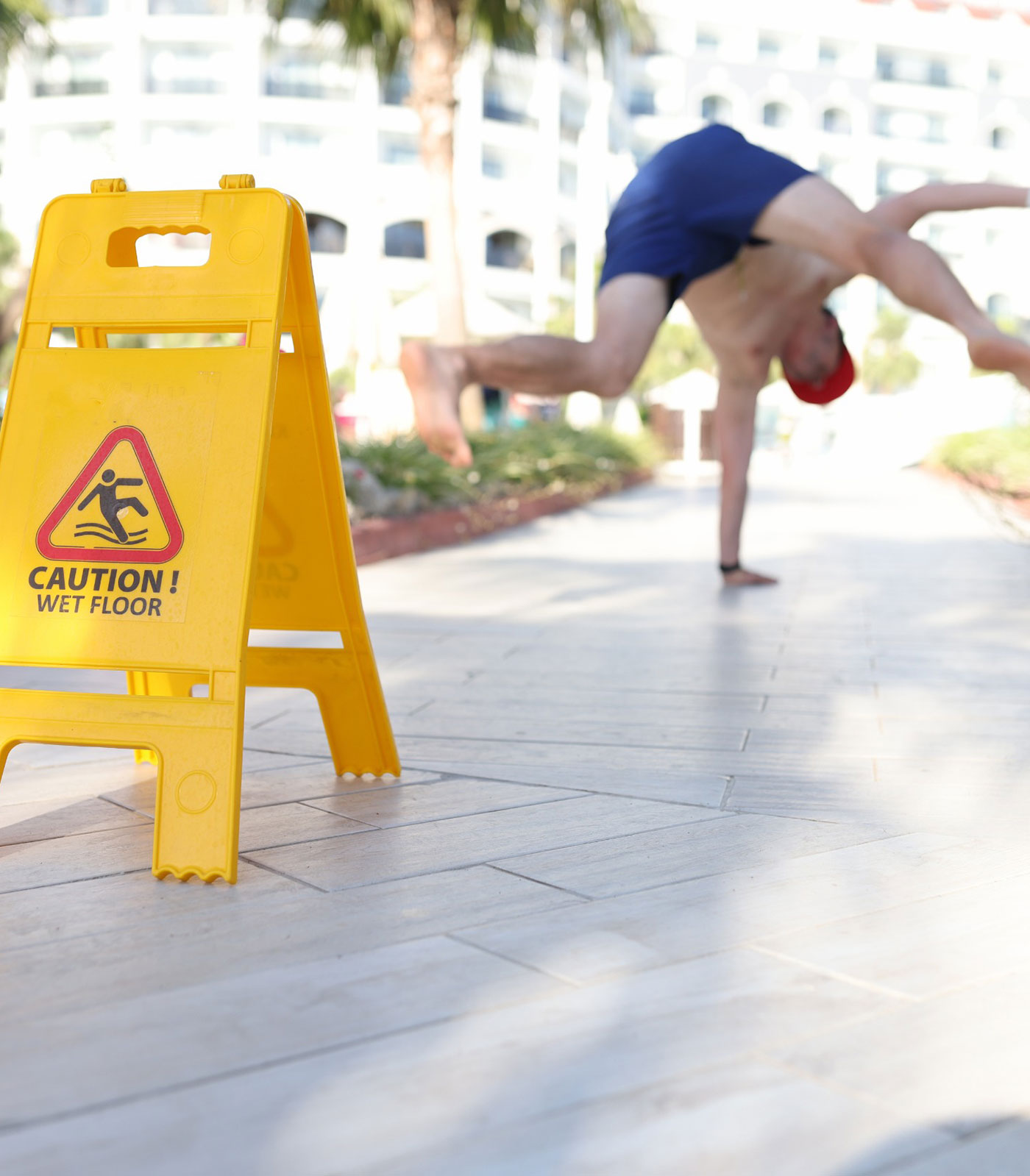
Wet floors are common in grocery stores, restaurants, retail stores, office buildings, and apartment common areas. Falls may happen because of spilled drinks, leaking coolers, tracked-in rain, recently mopped floors, or missing warning signs.
Important evidence may include photos, witness statements, cleaning logs, surveillance footage, and whether employees knew or should have known about the spill.
Unsafe Stairs and Missing Handrails
Falls on stairs can cause serious injuries. Broken steps, uneven stairs, loose carpeting, missing handrails, poor lighting, and slippery surfaces can make stairways dangerous.
These cases may involve building maintenance records, photos of the stairway, inspection history, prior complaints, and evidence of whether the property owner ignored the problem.
Poor Lighting
Poor lighting can make it hard to see steps, curbs, uneven pavement, spills, or obstacles. Falls may happen in parking lots, stairwells, apartment complexes, hotel hallways, garages, or business entrances.
Evidence may include photos taken at the same time of day, witness statements, maintenance records, and whether the lighting problem had been reported before.
Broken Sidewalks and Parking Lot Hazards
Uneven pavement, potholes, cracked sidewalks, raised edges, loose gravel, and poorly marked curbs can lead to serious falls. These hazards are common in parking lots, commercial walkways, apartment complexes, and public-facing properties.
The key issue is often who controlled the area and whether that person or business had enough time to discover and fix the hazard.
Loose Rugs, Mats, or Flooring
Loose entrance mats, curled rugs, torn carpet, uneven flooring, and slippery tile can create tripping hazards. These cases often involve questions about whether the flooring was maintained, whether a warning was provided, and whether similar incidents had happened before.
Snow, Ice, and Wet Entryways
Everett rain and wet weather can create slippery entrances, sidewalks, ramps, parking lots, and stairways. Tracked-in water near store entrances, poor drainage outside apartment buildings, and wet flooring in high-traffic commercial areas can all create fall risks.
Not every weather-related fall creates a claim, but property owners may still need to take reasonable steps when dangerous conditions are foreseeable. Evidence may include weather records, photos, maintenance logs, salting or cleaning records, warning signs, and witness statements.

Where Do Slip and Fall Accidents Happen in Everett?
Slip and fall accidents in Everett can happen anywhere a property owner, business, landlord, tenant, or property manager fails to keep the area reasonably safe. These claims often involve everyday places where people shop, work, live, or walk.
Common Everett fall locations include grocery stores, retail shops, restaurants, bars, coffee shops, apartment complexes, rental properties, hotels, office buildings, medical offices, parking lots, parking garages, sidewalks, public walkways, stairways, ramps, and building entrances.
Local areas may include stores and businesses near Everett Mall Way, commercial properties along Broadway and Evergreen Way, downtown Everett businesses and walkways, and properties throughout Snohomish County.
The location matters because different people or businesses may control different parts of the property. A store may be responsible for the inside of the business, while a landlord, property manager, maintenance company, contractor, or government entity may be responsible for the sidewalk, parking lot, stairway, or common area.
That distinction matters in Everett premises liability claims. Strong Law investigates who controlled the area, who was responsible for maintenance, whether complaints were made before the fall, and whether the hazard should have been fixed or warned about sooner.
What Evidence Matters After a Slip and Fall?
Evidence can disappear quickly after a slip and fall. A spill can be cleaned. A mat can be moved. A broken step can be repaired. Surveillance video can be overwritten. Witnesses can become harder to find.
The most important evidence often includes photos of the hazard, photos of your injuries, security video, incident reports, witness names, cleaning records, inspection logs, maintenance records, prior complaints, medical records, the shoes or clothing worn during the fall, and records showing missed work.
Strong Law can work to preserve evidence before it disappears. That can make a major difference when the property owner or insurance company denies responsibility.
What Injuries Are Common After a Slip and Fall?
Slip and fall injuries can be serious, especially for older adults, workers, and people who fall on hard surfaces, stairs, concrete, tile, or pavement.
Common injuries include broken wrists, broken arms, hip injuries, knee injuries, shoulder injuries, back injuries, neck injuries, herniated discs, concussions, traumatic brain injuries, spinal injuries, torn ligaments, nerve damage, cuts, bruising, scarring, chronic pain, and loss of mobility.
Some symptoms may appear right away. Others may get worse over several days. Headaches, dizziness, back pain, numbness, sleep problems, or trouble walking should not be ignored.
For serious head trauma, Strong Law can also help with Everett brain injury claims. If the fall causes permanent disability, spinal trauma, loss of mobility, or life-changing injuries, the case may require long-term medical, financial, and legal planning.
What Compensation Can You Recover After an Everett Slip and Fall?
The value of a slip and fall claim depends on the injury, medical treatment, evidence, fault issues, insurance coverage, and long-term impact of the fall.
In an Everett slip and fall claim, compensation may include financial losses and personal losses tied to the injury.
Financial losses may include emergency medical care, hospital bills, surgery, follow-up treatment, physical therapy, medication, medical equipment, lost wages, reduced earning ability, future medical care, rehabilitation costs, and out-of-pocket expenses related to the fall.
Personal losses may include pain and suffering, emotional distress, loss of enjoyment of life, disability, scarring, disfigurement, loss of mobility, and long-term physical limitations.
Insurance companies often focus on the cheapest version of the claim. Strong Law focuses on documenting the full impact of the fall, including future care, work limitations, and how the injury changed daily life.
What Insurance Problems Come Up After a Slip and Fall?
Slip and fall claims often involve aggressive insurance defenses. The insurance company may argue that the hazard was obvious, that you were not watching where you were going, that the property owner did not know about the hazard, or that your injuries were preexisting.
An adjuster may ask for a recorded statement, request broad medical authorizations, delay the claim, dispute your treatment, or offer a quick settlement before the full injury picture is clear.
Strong Law handles insurance communication so clients can focus on treatment and recovery. We work to document the claim, respond to adjuster arguments, and protect clients from settling before the long-term impact of the injury is understood.
How Does Comparative Fault Affect an Everett Slip and Fall Claim?
Insurance companies often try to blame the injured person after a fall. They may argue that you should have seen the hazard, walked around it, used more caution, worn different shoes, or reported symptoms sooner.
Washington uses comparative fault, so these arguments can affect the value of a claim. They do not automatically defeat the case.
Evidence can help push back. Photos, witness statements, surveillance footage, medical records, inspection logs, and maintenance records can show why the hazard was dangerous and why the property owner should have addressed it.

We’ve helped thousands of accident victims like you
we win
98%
4.9
stars
over
2,000


“Very professional, and treated me as an equal.”
"Just wanted to say thank you to Jed and his team at Strong Law. Not only was I happy with the outcome, but the entire process as a whole. I would definitely recommend this firm to anyone. Thanks again."
“Unbelievable work!”
"I had a claim involving my own insurance company. I tried to negotiate with them, and they completely denied my claim – two times. I then hired Strong Law, and the change was instant. The insurance company immediately began negotiating, and Jed was able to secure an unbelievably good settlement. I will never again attempt to take-on an insurance company without Strong Law in my corner. Thank you!"
“I got justice and awesome compensation.”
"I hired Strong Law after my car accident. Jed and his team worked hard on my case. They were professional and compassionate through my surgery and as I recovered, and they were awesome on communication. I got justice and awesome compensation. I would recommend Strong Law to anyone in my situation."
How Long Do You Have to File an Everett Slip and Fall Claim?
Many Everett slip and fall injury lawsuits are subject to Washington’s three-year personal injury filing deadline. Some cases may involve shorter deadlines or special notice requirements, especially if the fall happened on public property or involved a government entity.
Do not wait until the deadline is close. Evidence can disappear long before the legal deadline expires. Video footage may be overwritten, witnesses may become harder to reach, repairs may be made, and medical records may become harder to connect to the fall.
Contacting an attorney early does not mean you have to file a lawsuit immediately. It means evidence can be protected, deadlines can be tracked, and you can make informed decisions when ready.
What Should You Do After a Slip and Fall in Everett?
After a fall, your first priority should be medical care. When it is safe to do so, report the fall to the property owner, manager, landlord, or business and ask for a written incident report. Take photos of the hazard before it is cleaned, repaired, or moved. Photograph the surrounding area, lighting, floor, stairs, sidewalk, parking lot, and any visible injuries.
Try to get witness names and contact information. Save the shoes and clothing you were wearing. Get medical care as soon as possible, follow your doctor’s instructions, and keep medical records, bills, prescriptions, discharge papers, insurance letters, claim numbers, emails, and voicemail messages.
Avoid giving a recorded statement before you understand your rights. Do not accept a quick settlement before the full injury picture is clear.
Early action matters because slip and fall evidence is often easiest to preserve right after the fall.
Why Choose Strong Law for an Everett Slip and Fall Case?
Choosing an Everett slip and fall attorney is about more than hiring someone to send letters to an insurance company. You need a team that understands premises liability, notice, property records, insurance defenses, serious injuries, and the long-term cost of a fall.
Strong Law Accident & Injury Attorneys is led by attorney Jed Strong, whose background includes experience working with insurance defense. That perspective helps our team understand how insurance companies evaluate claims, dispute injuries, shift blame, and decide when to settle.
Strong Law does not treat serious slip and fall claims like routine paperwork. We prepare each case with the evidence needed to show what happened, why the property owner should be held accountable, and how the fall affected the client’s health, work, and daily life.
That preparation matters. When an insurance company knows a case is organized, documented, and ready for litigation if needed, settlement discussions often become more serious.
Strong Law offers free case evaluations, no upfront attorney fees, careful evidence preservation, clear communication, and litigation preparation when needed. You do not pay attorney fees unless we recover compensation for you.
If a fall causes a fatal injury, our team can also help families understand possible Everett wrongful death claims.
Frequently Asked Questions About Everett Slip and Fall Claims
How much does it cost to hire an Everett slip and fall lawyer?
Strong Law handles slip and fall cases on a contingency fee basis. That means you do not pay attorney fees upfront. We only get paid if we recover compensation for you through a settlement or award.
Should I call a lawyer after a slip and fall in Everett?
You should consider calling a lawyer if you were injured, medical care is ongoing, the property owner denies responsibility, evidence may disappear, or the insurance company is asking for a recorded statement. Slip and fall claims often depend on evidence that should be preserved quickly.
What if the property owner says they did not know about the hazard?
The claim may still be possible if the property owner should have discovered the hazard through reasonable inspection or maintenance. Evidence such as surveillance footage, cleaning logs, prior complaints, inspection records, and witness statements can help show whether the property owner had actual or constructive notice.
What evidence is important after a slip and fall?
Important evidence may include photos of the hazard, incident reports, witness statements, surveillance footage, cleaning records, maintenance records, prior complaints, medical records, photos of injuries, and the shoes or clothing worn during the fall.
What compensation can I recover after a slip and fall?
Compensation may include medical bills, lost wages, reduced earning ability, pain and suffering, physical therapy, future medical care, emotional distress, disability, scarring, and other fall-related losses.
How long do I have to file an Everett slip and fall claim?
Many Everett slip and fall injury lawsuits are subject to Washington’s three-year deadline, but some cases may involve shorter deadlines or special notice rules. It is best to get legal guidance early so evidence and deadlines are protected.
What if I was partly at fault for my fall?
Washington uses comparative fault. If the insurer claims you were partly responsible, your recovery may be affected. Evidence such as photos, witness statements, medical records, video footage, and maintenance records can help push back against unsupported blame.
Can I sue a business after slipping in a store or restaurant?
A claim may be available if the business created the hazard, knew about the hazard, or should have discovered and fixed it through reasonable care. These cases often depend on inspection records, employee knowledge, surveillance footage, and how long the hazard existed.
Does it matter where my slip and fall happened in Everett?
Yes. The location can affect who may be responsible and what evidence needs to be preserved. A fall inside a store may involve employee knowledge, cleaning logs, or surveillance footage. A fall at an apartment complex may involve landlord or property manager maintenance records. A fall on a sidewalk, parking lot, or public walkway may involve questions about who controlled that area and whether special notice rules apply.
Talk With an Everett Slip and Fall Lawyer
If you were injured in a fall in Everett or anywhere in Snohomish County, Strong Law Accident & Injury Attorneys can help you understand your options. Our team can investigate the fall, preserve evidence, deal with insurance companies, and pursue compensation under Washington law.
Call (425) 740-0344 or request a free consultation today. There is no fee to speak with us, and you do not pay attorney fees unless we recover compensation for you.
Get Your Free Slip and Fall Injury Consultation

How Strong Law will handle your case

We review reports, photos, witness statements, medical records, insurance letters, and other evidence to understand what happened and who may be responsible.

We review medical bills, lost income, future care, pain and suffering, property damage when applicable, and other losses tied to the claim.
We handle communication with insurers and push back against low offers, delays, and attempts to shift blame.

If the insurance company refuses to make a fair offer, we can file a lawsuit and prepare the case for court.
Insider experience
We Know How Insurance Companies Operate
Before founding Strong Law, attorney Jed worked as in-house counsel for GEICO, defending insurance companies in accident and injury claims. That experience helps our team understand how insurers evaluate claims, dispute injuries, and decide when to settle. We use that knowledge to build stronger claims for injured people.

No upfront fees
Zero Cost Unless You Win
You owe us nothing unless we recover compensation for you. There is no obligation to hire us after your consultation and no hidden attorney fees along the way.

First-Class Service
Legal Support That Goes Beyond the Basics
Our team does more than process paperwork. We answer your questions, explain your options, track important deadlines, and help you understand each step of the injury claim.

Start here
Get Your Free Case Evaluation Today
We will review your injury claim at no cost and explain your options clearly. The goal is to help you protect your health, your claim, and your financial recovery after a serious accident or injury.
Contact us
Our team is standing by to help you.